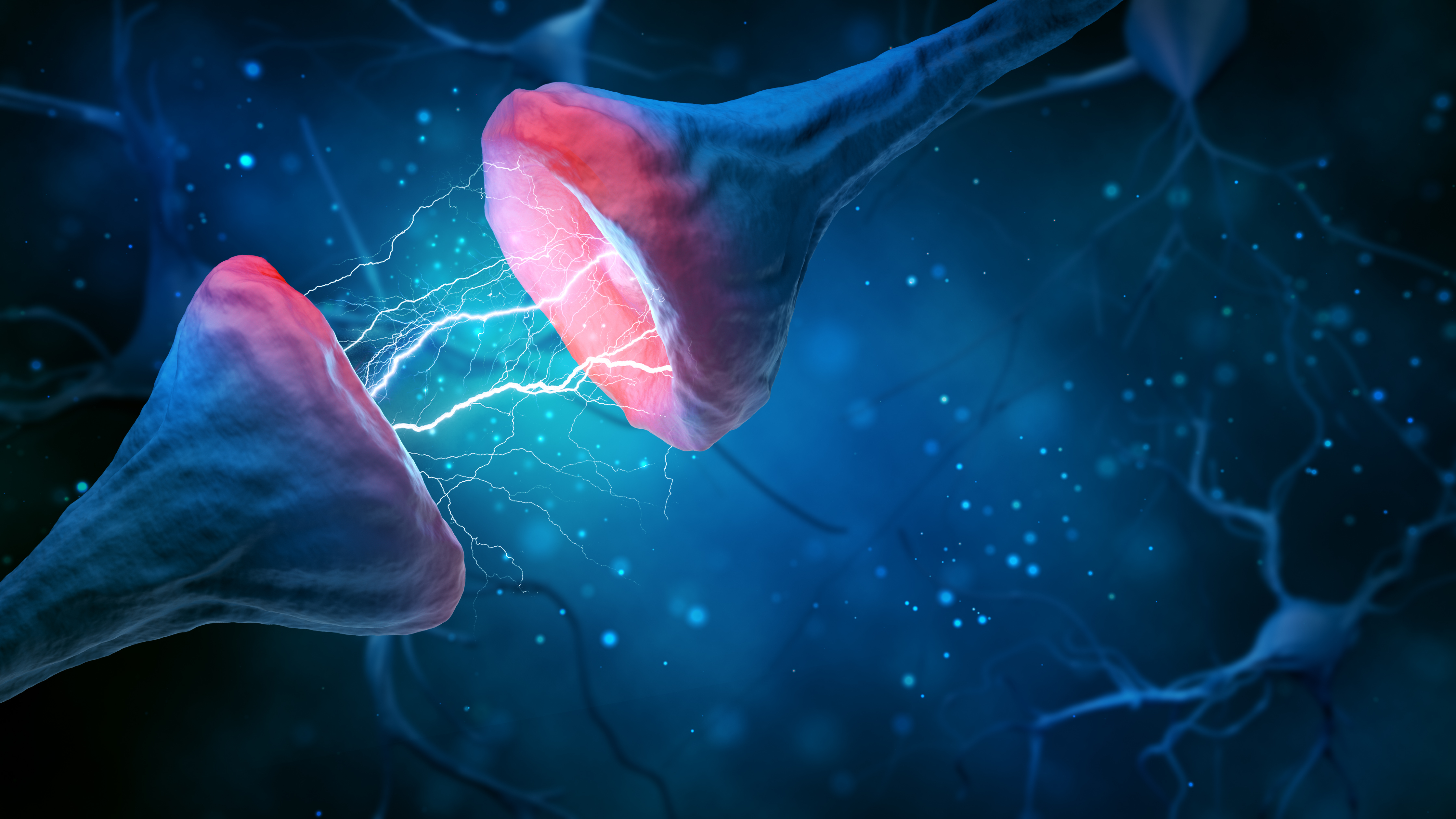
Emotions clearly have a PR problem.
Emotions are as constant and essential as breathing. They are neurobiological processes that shape our thoughts, decisions, and actions, and are deeply intertwined with performance and well-being. Our brains continually create emotions as an adaptive mechanism for survival.1
This process doesn’t simply stop when we walk into work – even if some people think we should (or indeed, could) leave our emotions at the door.
Our Brains are Prediction Machines
One of the most compelling insights from the Science of Emotions is that our brains are not reaction machines — they are prediction machines.2
To fulfill their most important role — reducing threat and uncertainty to maintain homeostasis (i.e., balance within our bodies) — every brain processes roughly 11 million bits of information per second, most of it subconsciously. 3
It simplifies this astounding complexity by making predictions based on prior experiences, culture, context, and personal interpretation. Much like a financial analyst making investment decisions based on past performance and current market trends, the brain makes an educated guess and sends neurochemical signals – data – to the body to prepare it for anticipated outcomes.4 5
Input Triggers Output
The output of this data-generating prediction machine is triggered by the input it gleans from its environment.
This has powerful implications for everyone at work. While we can’t control people’s backgrounds or past experiences, we can be highly intentional about the current environment. The workplace culture, its collection of norms, and all our actions and interactions within it are fodder for the machine.
We can intervene at two levels: INPUT (influencing the culture, environment, and workplace climate); and OUTPUT (understanding and regulating emotions).
That’s exciting news for leaders, because those left-brain cognitive processes we’ve been taught to value so highly can help us shape both input and output.
INPUT
For the input, we can deliberately create a work environment where we are not just managing difficult emotions. Rather, skilled leaders proactively cultivate the conditions for experiencing the kinds of feelings we (and our teams) need to be successful. Belonging6, trust and psychological safety are essential building blocks, and there are specific culture crafting tools and techniques to explicitly develop the necessary leadership skills to address emotional culture. 7
OUTPUT
We are not at the mercy of our emotions. They are simply signposts that guide our choices; best-guess predictions made by our tenacious brains. We can develop skills to influence them and regulate our physiological responses to emotional triggers.
When we understand how our nervous system operates under perceived threat (e.g., a breach in psychological safety, or peaks in the workload), we don’t need to automatically react to every physiological message in this loop. Instead, we can make wise, deliberate choices and choose actions that align with our goals and values. This intentional response builds resilience and flexibility, especially in high-stakes or emotionally charged situations.
For example, a racing heart before a big presentation can be framed either as anxiety (which brings a narrower survival focus)8 or excitement (which broadens attention and increases creativity)9. Choosing how we interpret dynamic signals yields dividends not only for wellbeing, but also performance. And deciding ahead of time how we WANT to feel gives us the opportunity to figure out the path that will lead to that experience.
Implications for Leaders
Leaders who integrate the Science of EmotionsTM into their work can create resilient and engaging workplaces, where employees feel safe, valued, purposeful, and aligned with organizational goals.
Building this kind of culture doesn’t just boost immediate performance. It’s a long-term strategy that attracts and retains top talent, enhancing overall organizational health and success.10
In short, the Science of EmotionsTM offers leaders an evidence-based approach to transform the workplace into an agentic space where emotions are allies, not adversaries.
This shift isn’t just about understanding feelings; it’s about making strategic choices that leverage the data contributed by emotions as part of a high-performing, thriving culture.

© 2026 Maren Gube – All Rights Reserved
- D. R. Bach and P. Dayan, “Algorithms for survival: a comparative perspective on emotions,” Nature Reviews Neuroscience, vol. 18, no. 5, pp. 311–319, May 2017, doi: https://doi.org/10.1038/nrn.2017.35. ↩︎
- L. F. Barrett, “The theory of constructed emotion: an active inference account of interoception and categorization,” Social Cognitive and Affective Neuroscience, vol. 12, no. 1, pp. 1–23, Oct. 2017, doi: https://doi.org/10.1093/scan/nsw154 ↩︎
- G. Markowsky, “Information theory – Physiology | Britannica,” Encyclopædia Britannica. 2019. Available: https://www.britannica.com/science/information-theory/Physiology ↩︎
- S. B. Klotz interviewed by Frieda, “Employee Emotions Aren’t Noise — They’re Data,” MIT Sloan Management Review, Nov. 06, 2019. https://sloanreview.mit.edu/article/employee-emotions-arent-noise-theyre-data/ ↩︎
- T. Bosse, C. M. Jonker, and J. Treur, “Formalisation of Damasio’s theory of emotion, feeling and core consciousness,” Consciousness and Cognition, vol. 17, no. 1, pp. 94–113, Mar. 2008, doi: https://doi.org/10.1016/j.concog.2007.06.006. ↩︎
- R. F. Baumeister and M. R. Leary, “The need to belong: Desire for interpersonal attachments as a fundamental human motivation.,” APA PsycNet, 1995. https://psycnet.apa.org/record/1995-29052-001 ↩︎
- S. Barsade and O. O’Neill, “Manage Your Emotional Culture,” Harvard Business Review, Nov. 17, 2016. https://hbr.org/2016/01/manage-your-emotional-culture ↩︎
- G. Dreisbach and T. Goschke, T, “How positive affect modulates cognitive control: reduced perseveration at the cost of increased distractibility”. Journal of Experimental Psychology: Learning, Memory, and Cognition, 30(2), 343, 2004. ↩︎
- B. L. Fredrickson, “The broaden–and–build theory of positive emotions,” Philosophical Transactions of the Royal Society of London. Series B: Biological Sciences, vol. 359, no. 1449, pp. 1367–1377, Sep. 2004, doi: https://doi.org/10.1098/rstb.2004.1512. ↩︎
- C. Krekel, G. Ward, and J.-E. De Neve, “Employee Wellbeing, Productivity, and Firm Performance,” papers.ssrn.com, Mar. 03, 2019. https://papers.ssrn.com/sol3/papers.cfm?abstract_id=3356581 ↩︎
Cover Image K_E_N iStock/Getty Images
 Maren Gube, PhD